“In an emergency, you may have minutes to make a decision, but months or years later, someone may ask why you made it.”
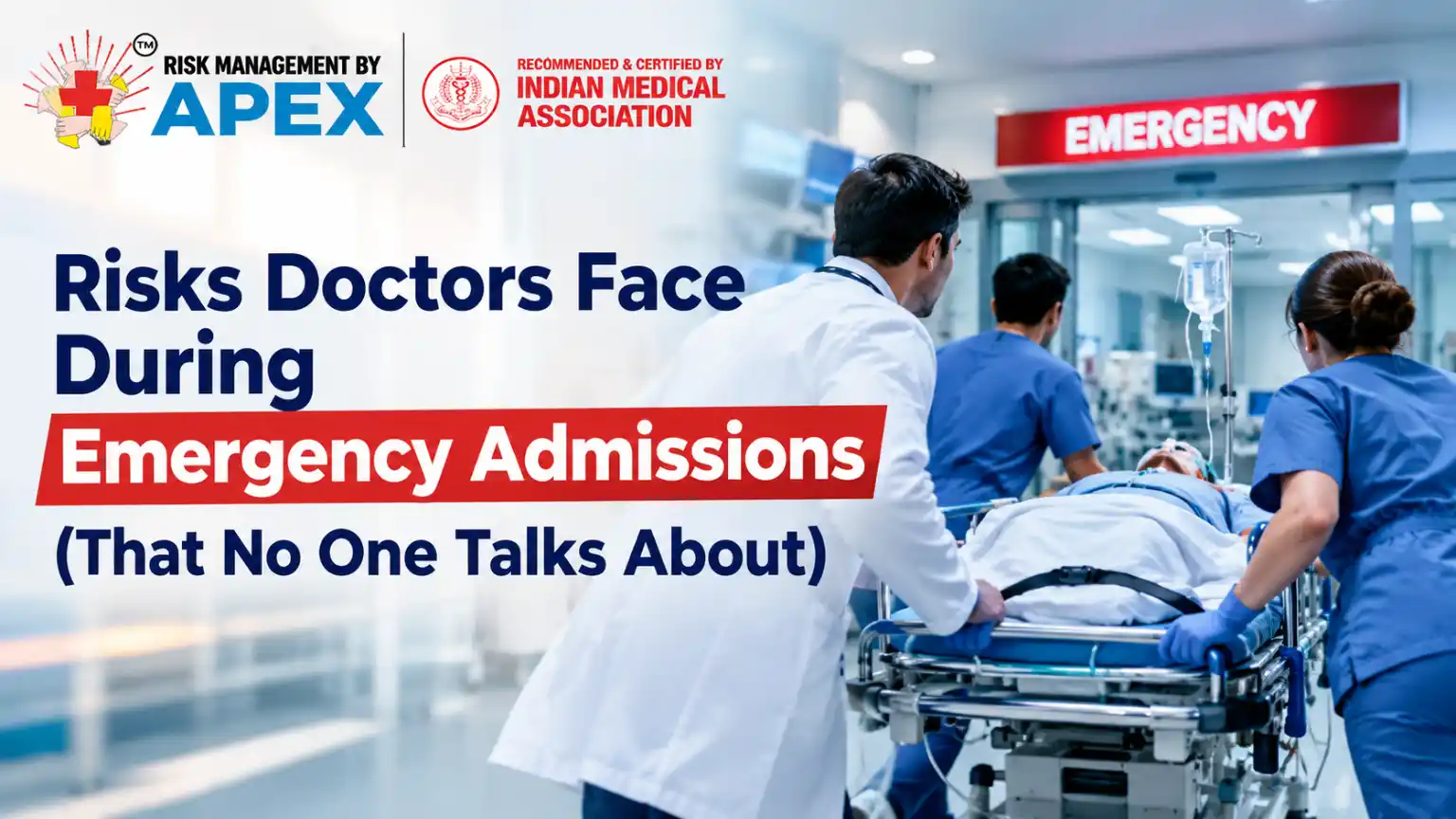
A patient arrives unexpectedly. The history is incomplete, relatives are anxious, investigations are still pending, and several doctors may become involved within minutes. The clinical priority is obvious: stabilize the patient.
But emergency care also creates medico-legal risks that are easy to overlook in the moment.
1. Rushed or incomplete documentation
When the emergency department is busy, documentation can become brief or delayed. Yet the medical record may later become the clearest account of what was known, considered and done.
The NMC’s 2023 regulations specifically emphasize proper documentation of information shared and consent, while government hospital guidance calls for chronological documentation of emergency assessment, investigations and procedures.
Reduce the risk: Record the initial condition, important findings, working diagnosis, decisions, interventions, changes in condition and reasons for significant decisions.
2. Consent and communication gaps
Emergency treatment can leave little time for lengthy discussions. Where possible, consent should still be obtained without allowing the process to interfere with necessary emergency care. The NMC regulations recognise this balance.
Reduce the risk: Explain the immediate problem, proposed intervention, material risks and alternatives where practicable. Document when consent could not reasonably be obtained and why urgent treatment was necessary.
3. “Why was there a delay?”
After an unexpected deterioration, relatives may question why a scan, referral, procedure, escalation or transfer did not happen sooner.
Reduce the risk: Document clinically relevant timelines, including when symptoms were identified, whom you contacted, advice received, investigations requested and reasons for escalation or non-escalation.
4. Handover failures
Emergency patients often move between duty doctors, consultants, nurses, specialists and on-call teams. Information can be lost during that transition.
Reduce the risk: Make handovers structured and specific. Highlight pending investigations, unstable parameters, treatment given, concerns and what needs monitoring next.
5. Who was responsible?
When multiple departments participate, responsibility can become unclear. This is particularly important when care crosses emergency medicine, surgery, anaesthesia, critical care or other specialties.
Reduce the risk: Clearly document your assessment, advice sought, referrals made, decisions taken and the person responsible for ongoing management.
6. Medication, investigation and procedural errors
Time pressure, incomplete histories, allergies, changing clinical conditions and multiple teams can increase opportunities for mistakes.
Government hospital guidance specifically calls for documenting allergies, procedures and adverse or near-miss events.
Reduce the risk: Use established emergency protocols, medication checks, escalation pathways and incident-reporting systems.
7. Complaints, police involvement and difficult relatives
An unexpected deterioration or death can quickly become emotionally charged. A complaint, threat or police involvement may follow even when the clinical team believes appropriate care was provided.
Indian judicial decisions have repeatedly examined documentation, consent and emergency decision-making. Courts have also recognised that a medical professional is not negligent merely because another course might have been possible, provided the accepted professional standard was followed.
Reduce the risk: Stay professional, communicate clearly, preserve records and escalate medico-legal concerns through the hospital’s appropriate channels.
What Doctors Should Remember
Emergency medicine requires rapid decisions, but risk management does not have to slow good clinical care.
Good documentation, clear communication, structured handovers and established protocols create a stronger record of responsible decision-making. Professional indemnity insurance can provide financial and legal protection in situations covered by the policy terms and conditions.
At Risk Management by APEX, the focus goes beyond issuing a policy. Doctor education, medico-legal awareness, claims preparedness and support during difficult situations are part of a broader risk-management approach.
The goal is simple: help doctors prepare for the medico-legal side of difficult clinical situations before they become difficult legal situations.