
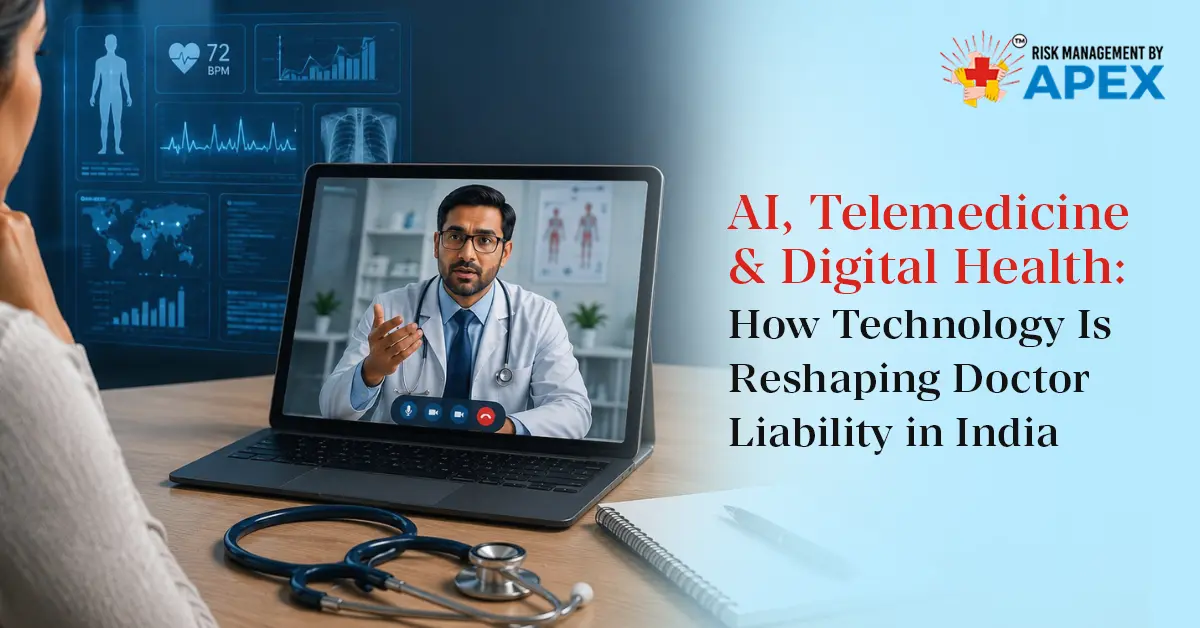
“Innovation changes how we practice medicine. Responsibility determines how we use it.”
From AI-powered diagnostics to telemedicine consultations, technology is rapidly becoming part of everyday healthcare. Doctors today rely on digital tools for diagnosis, treatment planning, documentation, and patient communication more than ever before.
While these innovations improve efficiency and access to care, they also raise an important question: if technology influences a clinical decision, who is responsible when something goes wrong?
As healthcare evolves, so do medico-legal expectations.
How Technology Is Entering Clinical Practice
Technology is no longer limited to hospital infrastructure. It is now directly involved in patient care.
Doctors increasingly use:
- AI-assisted diagnostic tools for radiology and pathology
- Clinical decision support systems
- Telemedicine platforms for remote consultations
- Electronic Medical Records (EMRs)
- Predictive analytics for disease management
- Wearable devices that track patient health data
- Digital monitoring and remote care solutions
Many of these technologies improve speed, consistency, and access to healthcare. However, they also introduce new layers of responsibility.
Real Examples That Raised Important Questions
Globally, healthcare AI has already become mainstream. The FDA in the United States has authorized hundreds of AI-enabled medical devices, particularly in radiology and diagnostic imaging.
In 2023, concerns emerged around some AI tools used in healthcare administration and clinical prioritization after reports suggested that algorithmic outputs could produce unintended biases when not properly monitored. These incidents reinforced an important lesson: technology requires human oversight.
Closer to home, telemedicine expanded dramatically in India following the release of the Telemedicine Practice Guidelines by the Medical Council of India and NITI Aayog in 2020, now overseen through the National Medical Commission framework.
At the same time, hospitals worldwide have faced medico-legal challenges linked to incomplete EMR documentation, incorrect data entry, and communication gaps arising from digital systems rather than direct clinical errors.
How Doctor Liability Is Changing
Technology can assist clinical decisions, but it does not replace professional judgment.
A doctor who relies entirely on an AI-generated recommendation without exercising independent clinical assessment may still be held accountable if the decision harms a patient.
Several emerging medico-legal concerns include:
- Misdiagnosis despite AI support
- Incorrect algorithm outputs
- Overreliance on automated recommendations
- Failure to verify digital records
- Incomplete EMR documentation
- Patient data privacy breaches
- Inadequate informed consent for technology-assisted care
Courts and regulators generally view technology as a tool, not a substitute for clinical responsibility.
The final decision remains the doctor’s responsibility.
Emerging Risks for Indian Doctors
India’s healthcare ecosystem is becoming increasingly digital.
Telemedicine consultations have become routine across specialties. Digital record retention expectations continue to grow. Patients are more informed about technology and often expect modern healthcare systems to be accurate and transparent.
At the same time, cybersecurity has emerged as a major concern. Healthcare data breaches can expose sensitive patient information and create legal and regulatory challenges for healthcare institutions.
Documentation standards are also rising. In disputes, electronic records are often reviewed in detail, making accurate and timely documentation more important than ever.
These developments do not increase risk because technology is not dangerous. They increase risk because healthcare systems are becoming more interconnected and complex.
Why Professional Indemnity Matters More Than Ever
As medical practice evolves, so do medico-legal exposures.
Questions involving telemedicine consultations, digital records, AI-supported decisions, and technology-assisted treatment may require legal clarification when disputes arise.
This is where professional indemnity insurance, professional indemnity for doctors, and professional indemnity insurance for doctors remain important components of modern medical practice.
While coverage depends on individual policy terms and circumstances, indemnity protection helps doctors navigate allegations, disputes, and legal defence requirements arising from professional practice.
The key is ensuring that protection evolves alongside the way medicine is practiced.
How APEX Helps Doctors Navigate the Future
At APEX Risk Management and Professional Indemnity Services, the focus extends beyond traditional insurance.
APEX works with doctors and hospitals to understand emerging medico-legal risks associated with modern healthcare delivery. This includes guidance on documentation practices, risk management strategies, consent processes, and evolving regulatory expectations.
By combining medico-legal expertise with professional indemnity support, APEX helps healthcare professionals adapt confidently to technological change while maintaining strong risk management practices.
The objective is not to slow innovation. It is to ensure innovation is supported by preparedness.
Conclusion
Technology is transforming healthcare at an extraordinary pace. AI, telemedicine, digital records, and advanced analytics are creating new opportunities to improve patient care.
At the same time, responsibility remains firmly rooted in professional judgment, communication, and accountability.
Doctors who understand these evolving risks will be better prepared for the future.
The future of medicine may be powered by technology, but trust and accountability will always remain human responsibilities.