“Awareness is the first step toward prevention.”
Every year, Skin Cancer Awareness Month reminds healthcare professionals that some of the most dangerous cancers can begin as lesions that patients barely notice. While skin cancer rates in India remain lower than in many Western countries, delayed diagnosis, lack of awareness, and missed follow-up opportunities continue to present significant clinical challenges.
For dermatologists and oncologists, skin cancer is not just a diagnostic concern. It is also a communication, documentation, and risk management responsibility that can influence patient outcomes and medico-legal exposure.
Why Skin Cancer Awareness Still Matters
According to the World Health Organization (WHO), between 2 and 3 million non-melanoma skin cancers and approximately 132,000 melanoma skin cancers are diagnosed globally each year. The International Agency for Research on Cancer (IARC) continues to report increasing skin cancer incidence worldwide.
A common misconception among patients is that skin cancer only affects fair-skinned populations or individuals with extensive sun exposure. In reality, skin cancers can occur across all skin types and often go unnoticed because early lesions may appear harmless.
Early detection remains one of the strongest predictors of successful treatment outcomes.
The Dermatologist's Critical Role
Dermatologists are often the first specialists to identify suspicious lesions.
A patient may present with a mole that has changed gradually over several years or a non-healing lesion that has been ignored because it appeared painless. What seems routine during consultation can sometimes require closer investigation.
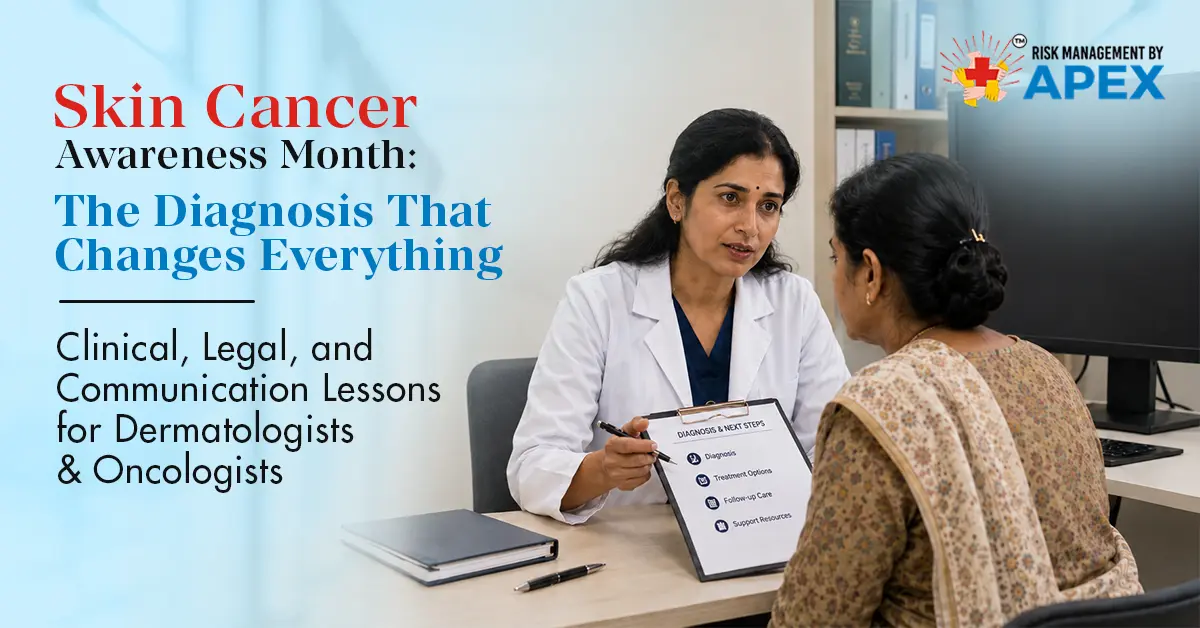
This makes careful examination, documentation, patient education, and timely referral essential.
Equally important is documenting discussions regarding warning signs, follow-up recommendations, and biopsy advice. Good records not only support continuity of care but also help demonstrate appropriate clinical decision-making if questions arise later.
The Oncologist's Perspective
Once a diagnosis is confirmed, management becomes multidisciplinary.
Oncologists, surgical oncologists, pathologists, and dermatologists often work together to determine staging, treatment planning, and long-term surveillance. Beyond treatment, specialists frequently help patients navigate uncertainty and manage expectations regarding outcomes.
Clear communication becomes particularly important when discussing prognosis, recurrence risk, and treatment options.
As therapies continue to evolve, long-term follow-up remains a critical component of care.
Real Cases and Lessons
One widely cited international case involved a patient whose melanoma diagnosis was delayed after a suspicious lesion was initially considered benign. The delayed diagnosis led to advanced disease progression and subsequent litigation. Reviews of such cases consistently highlight communication gaps, inadequate follow-up, and insufficient documentation as recurring themes.
In another reported case reviewed in medical litigation literature, failure to appropriately communicate biopsy recommendations resulted in delayed treatment and a negligence claim. The clinical issue was only part of the problem. The larger issue was the inability to demonstrate that risks and recommendations had been clearly communicated.
The lesson is clear. Documentation and communication are often as important as the diagnosis itself.
The Medico-Legal Side of Skin Cancer
Skin cancer claims frequently involve allegations such as:
- Delayed diagnosis
- Failure to investigate suspicious lesions
- Delayed specialist referral
- Inadequate follow-up
- Poor documentation of clinical findings
- Failure to communicate risks effectively
Importantly, these situations do not necessarily indicate negligence. Many arise from complex clinical circumstances, patient delays, or misunderstandings.
However, they reinforce the importance of structured clinical processes.
Why Risk Management Matters
Strong risk management begins long before a complaint arises.
Clear documentation of examinations, referrals, patient discussions, and follow-up plans can significantly strengthen clinical defence. Consistent communication helps patients understand risks and recommendations, reducing misunderstandings.
This is also where professional indemnity, professional indemnity insurance, professional indemnity for doctors, and professional indemnity insurance for doctors play an important role. These safeguards help protect healthcare professionals when medico-legal questions arise despite appropriate care.
Protection is most effective when combined with prevention-focused practices.
How APEX Supports Specialists
At APEX Risk Management and Professional Indemnity Services, the focus extends beyond insurance coverage.
APEX supports specialists through medico-legal guidance, documentation awareness, risk management education, and professional protection strategies. The goal is to help doctors navigate complex clinical situations with confidence while reducing avoidable medico-legal exposure.
By focusing on prevention and preparedness, APEX partners with healthcare professionals as a long-term risk management partner.
Conclusion
Skin cancer diagnosis is about far more than identifying a lesion. It involves timely recognition, effective communication, appropriate referral, and careful documentation.
For dermatologists and oncologists, these elements contribute not only to better patient outcomes but also to stronger professional protection.
In skin cancer care, awareness can change outcomes. Preparation can protect careers.
References
- World Health Organization (WHO) – Skin Cancer Facts
- International Agency for Research on Cancer (IARC) Global Cancer Observatory
- American Cancer Society – Melanoma and Non-Melanoma Skin Cancer Resources
- Peer-reviewed medico-legal case analyses involving delayed melanoma diagnosis and communication-related claims