
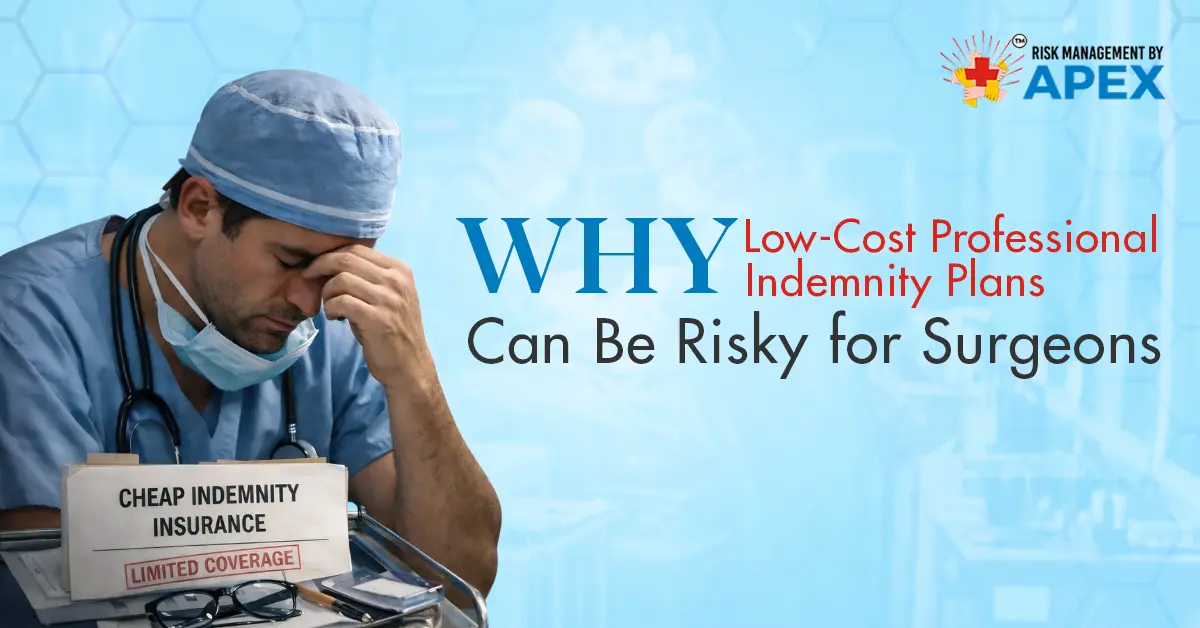
“In surgery, precision is everything. The same principle applies to the protection behind your practice.”
Surgeons work in one of the most demanding areas of medicine. Every decision carries weight. Outcomes depend on skill, timing, and judgment. This also means that surgeons face higher medico-legal exposure than most other specialities.
Nevertheless, when it comes to professional indemnity insurance, many surgeons still choose plans based primarily on cost. A low premium may seem efficient, but without strong claim support, it can become a liability rather than protection.
Why Surgical Practice Carries a Higher Risk
Surgical practice is inherently complex. Procedures are invasive, and even when performed correctly, complications can arise. Patients often have high expectations regarding outcomes, especially in elective or high-value procedures.
Emergency decision-making adds another layer of pressure. Surgeons may need to act quickly with limited information. Postoperative complications, even when explained in advance, can lead to dissatisfaction or disputes.
Consent also becomes a critical factor. In many cases, disputes are not about the procedure itself, but about whether risks were adequately communicated and documented.
These realities make professional indemnity for doctors especially important for surgeons.
Real Medico Legal Cases Surgeons Should Note
In Kunal Saha vs AMRI Hospital, one of the most widely discussed cases in India, the Supreme Court awarded compensation exceeding ₹5.5 crore. The case involved alleged negligence during treatment and highlighted how high-value claims can arise in complex medical situations.
The National Consumer Disputes Redressal Commission has also handled several surgical negligence cases between 2018 and 2023 where compensation crossed ₹50 lakhs. Many of these involved postoperative complications, delayed intervention, or consent-related disputes.
These cases underline a simple point. Surgical risk is not only clinical. It is also financial and legal.
The Problem With Low-Cost Indemnity Plans
Low-cost professional indemnity insurance for doctors often focuses on basic coverage. While the policy may cover compensation, it may lack structured support during the most critical stages of a claim.
In real situations, surgeons need more than reimbursement. They need guidance when a complication occurs, help in reviewing documentation, and a clear strategy for responding to notices.
Consider a scenario where a surgeon faces a postoperative complication that leads to a complaint. The insurer processes the claim but does not provide active medico-legal guidance. The surgeon must independently coordinate legal advice, prepare responses, and manage communication.
This gap between coverage and support is where risk increases.

Why Claim Support Matters More Than Premium
In medico-legal cases, the quality of defence often determines the outcome. Early and well-structured responses can prevent escalation. Proper documentation review can strengthen the case. Clear communication can reduce misunderstandings.
Without this support, even defensible cases may become prolonged or financially burdensome.
This evidence is why professional indemnity insurance should not be evaluated only on the premium. The real value lies in how effectively the policy supports the doctor during a claim.
How Apex Supports Surgeons Differently
At Apex Risk Management and Professional Indemnity Services, the focus is on supporting doctors through the entire medico-legal process.
Surgeons benefit from access to a medico-legal panel with clinical understanding, structured documentation guidance, and end-to-end case handling. Support begins at the first sign of a complaint and continues through resolution.
With a pan-India presence and experience in complex cases, Apex is designed to handle high-risk specialties where precision and preparedness matter.
Conclusion
Surgery already carries inherent risk. The purpose of indemnity is to reduce uncertainty, not introduce it.
Choosing a low-cost plan without strong support may seem economical at first, but it can increase exposure when it matters most.
In surgery, precision matters. The same applies to choosing the protection that stands behind you.